
Well-suited for group-based training sessions that prioritize both quality and affordability
Basic Life
Support
Basic Life Support
Well-suited for group-based training sessions that prioritize both quality and affordability


Key
Course
Features
Up to 48 participants
Designed for team training sessions
Total 5 hours
Takes up to half a day on average
Most popular course
The most affordable and
accessible course we provide
Key
Course
Features
Up to 48 participants
Designed for team training sessions
Total 5 hours
Takes up to half a day to complete
Our Most Cost Effective Course
Lowest cost per participant, great for large batches
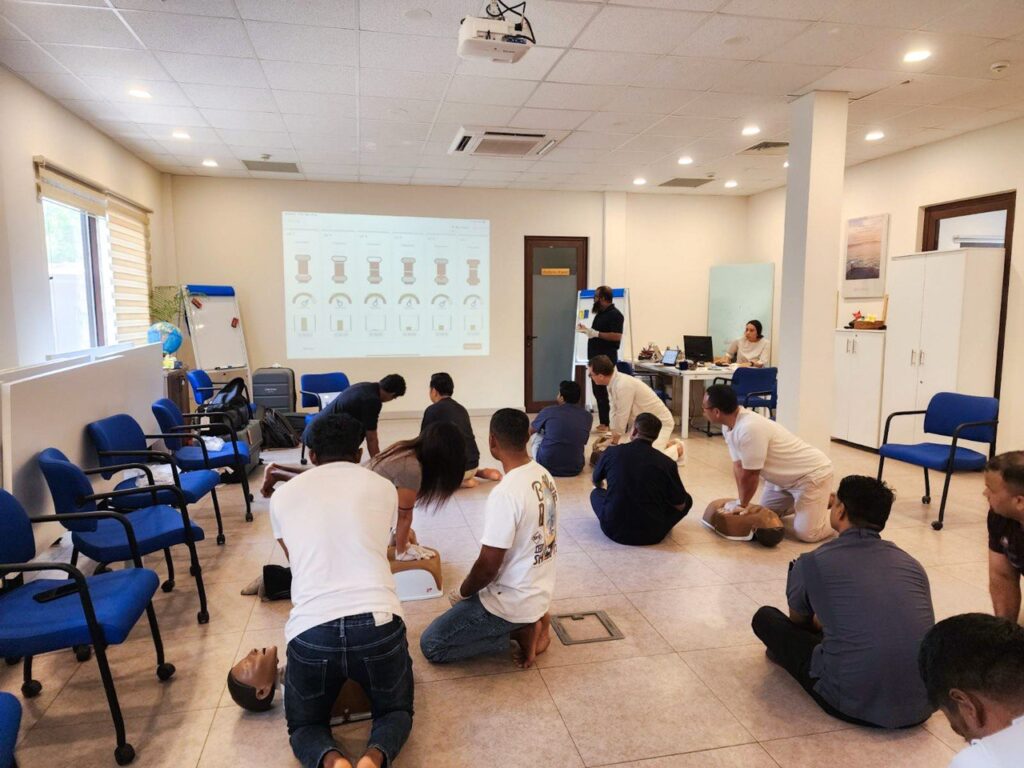
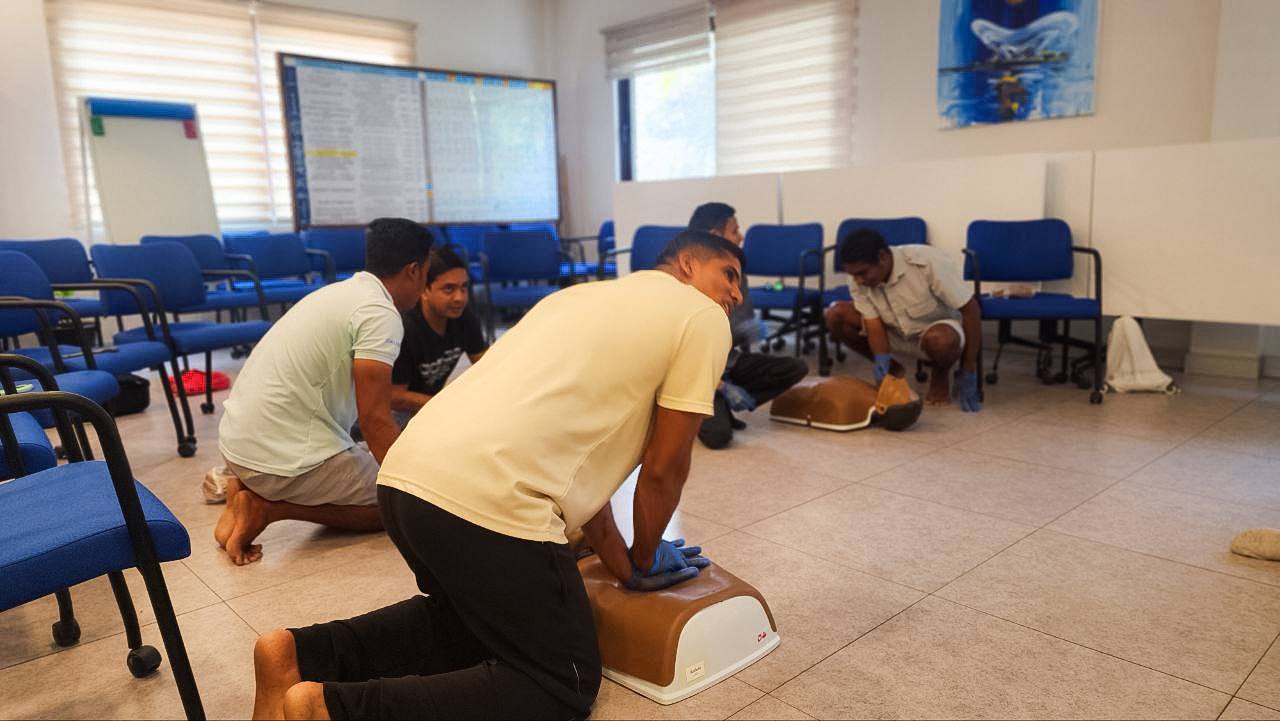
Training Aims
To ensure that participants are able to provide effective first aid to casualties with life threatening conditions in emergencies, with available resources.
Course Content
Objectives
- Understand the importance of BLS
- Recognize and respond to cardiac and respiratory emergencies
- Perform high-quality CPR on adults, children, and infants
- Use an Automated External Defibrillator (AED) effectively
- Provide choking relief for adults, children, and infants
Topics Covered
Note that topics in this training will not be covered in details except for life threatening conditions. Standard First Aid Course is for those who require in depth knowledge of first aid.
Introduction to Basic Life Support
Course objectives and goals
Importance of BLS training
Legal and ethical considerations
Good Samaritan laws
Consent and implied consent
Recognizing Emergencies – DRABC
Identifying signs of cardiac arrest
Assessing the scene for safety
Determining responsiveness
Cardiopulmonary Resuscitation (CPR)
Adult CPR
Checking for responsiveness and breathing
Performing chest compressions
Hand placement
Compression depth and rate
Providing rescue breaths
Techniques for mouth-to-mouth and barrier devices
Combining compressions and breaths
Two-rescuer CPR
Child and Infant CPR
Differences in technique
Compression and breath ratios
Hand placement for child and infant CPR
Automated External Defibrillator (AED)
Understanding AEDs
What an AED does
When and how to use an AED
AED operation
Turning on the AED
Attaching AED pads
Following AED prompts
Safety precautions
Choking Relief
Adult and child choking
Recognizing choking
Performing the Heimlich maneuver (abdominal thrusts)
Back blows and chest thrusts
Infant choking
Recognizing choking in infants
Back blows and chest thrusts for infants
Putting It All Together
Scenario-based practice
Simulated cardiac arrest scenarios
Simulated choking scenarios
Hands-on practice
Practicing CPR on manikins
Practicing AED usage
Practicing choking relief techniques
Requirements
Assessment
This training will utilize continuous assessment methodologies (British Red Cross methodologies) – there will not be a separate written examination unless otherwise requested. Trainer shall keep competency assessment records of each participant throughout the training. Assessment will be based on: (1) attendance and punctuality; (2) participation in class; and (3) performance competency.
On successful completion of the training a Basic First Aid certificate will be awarded to each participant.
Attendance
90% attendance is required to meet certification criteria. Due to unavoidable circumstances if any participant is unable to meet this requirement, a valid explanation is required. In such situations, issuing of certificate is based on (2) and (3) of assessment criteria and recommendation of the trainer.
Download course content