
Our most inclusive and encompassing training, designed for first aid teams
Standard First Aid
Standard
First Aid
Our most inclusive and encompassing training, designed for first aid teams

Key
Course
Features
Up to 24 participants
Designed for team training sessions
Total 24 hours
Takes up to 3 ~ 4 days when disritbuted
Most Comprehensive
Catered towards participants that
need intensive training
Key
Course
Features
Up to 24 participants
Designed for team training sessions
Total 24 hours
Takes up to 3 ~ 4 days when
distributed
Most Comprehensive
Catered towards participants that need intensive training
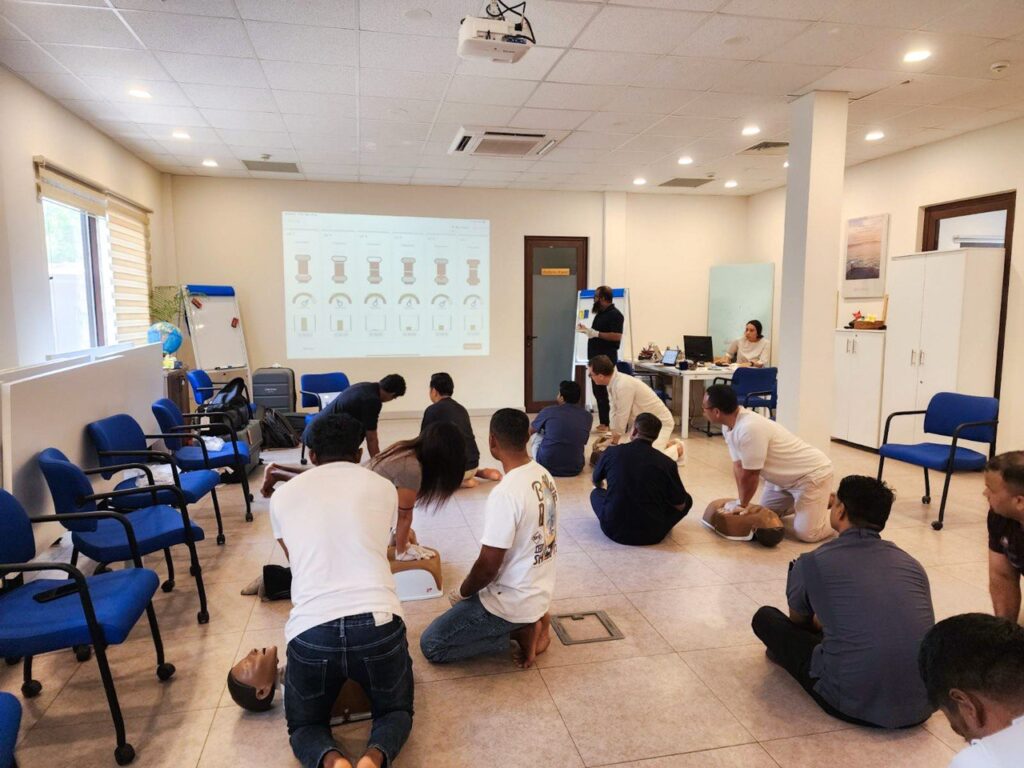
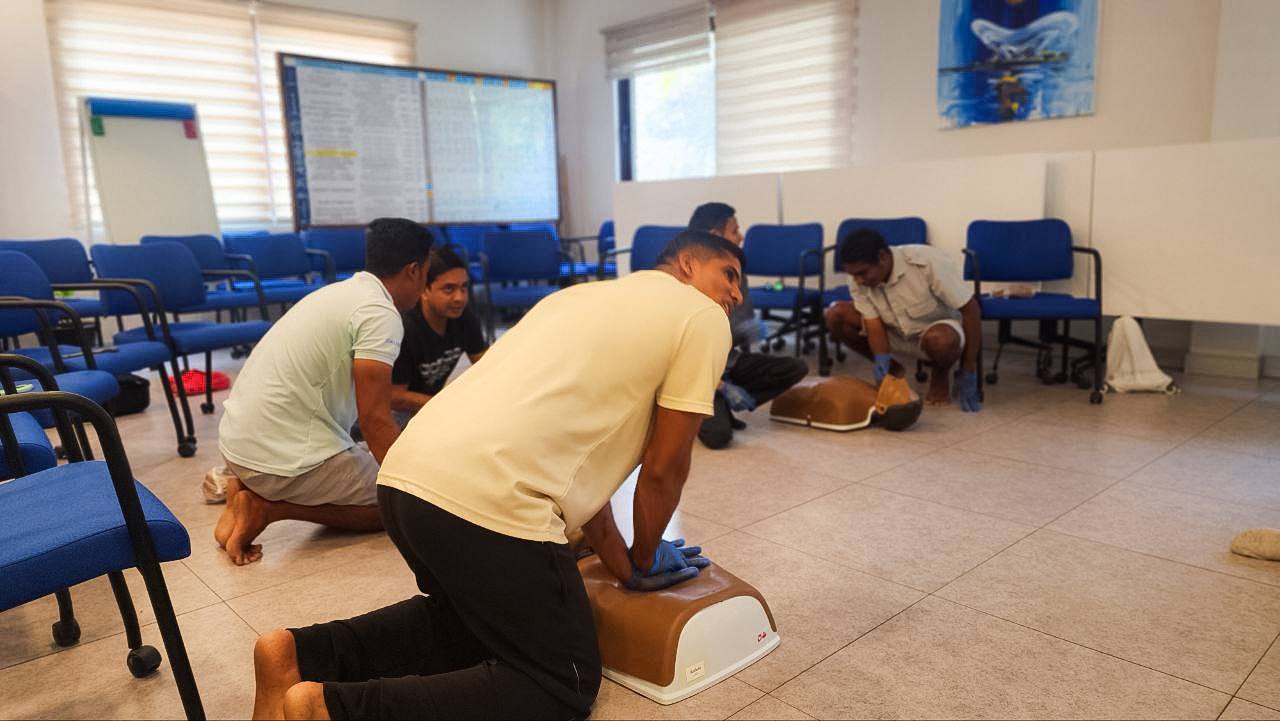
Training Aims
To ensure that participants are able to provide effective first aid to casualties with life-threatening conditions in emergencies and have the knowledge to attend other major injuries that require first aid, with available resources including Automated External Defibrillator (AED), and through repeatedly practicing the procedures
Course Content
Objectives
Participants are able to identify life-threatening situations.
Participants are able to do what is necessary to save lives.
Participants are able to provide CPR to adults in emergencies.
Participants understand the principles of AED treatment.
Participants are able to identify and provide treatment using an AED.
Participants know how to care for an AED.
Participants know how to manage emergency situations.
Participants are able to provide first aid for common conditions.
Participants know how to improvise when first aid equipment is not available.
Participants are able to manage respiratory emergencies.
Participants know how to identify a fracture and apply a splint.
Participants are able to provide assistance to prevent further injury to casualties.
Participants are able to transport casualties during emergencies.
Participants take part in an emergency simulation exercise and respond effectively.
Participants are able to thoroughly understand emergency response procedures through repeated practice.
Topics Covered
Major topics of this training course will be covered in detail, including life-threatening conditions.
Introduction to First Aid
What is First Aid?
Issues in Providing Care
Consent of casualty
Safety of first aider, casualty, and bystanders
Protective precautions
Critical incident stress & victim death
Incident Management
Managing emergency scenes effectively
Primary Assessment & Basic Life Support (BLS)
Circulatory system
Chain of survival
Choking
Drowning
Smoke inhalation
Trauma
Airway obstruction
Cardiopulmonary Resuscitation (CPR) for adults and children
A – Airway
B – Breathing
C – Compressions / Circulation
D – Deadly bleeding
Providing CPR for extended periods
Secondary Assessment
Head-to-toe assessment
Patient history
Checking vital signs
Circulatory Emergencies
External bleeding
General treatment for blood loss
Bandages and improvisation
Embedded objects
Cleaning wounds
Infection prevention
Safe disposal of waste
When to seek medical help
Internal bleeding
Heart attack & angina
Stroke
Hypovolemic shock
Respiratory Emergencies
Obstructed airway
Anaphylactic shock
Asthma
Hyperventilation
Penetrating chest wounds
Choking management
Cardiac Anatomy and Function
Anatomy of the heart
Conduction system of the heart
Electrical activity in the heart
Heart rhythms
Sinus rhythm
Ventricular fibrillation
Ventricular tachycardia
Asystole
Basics of cardiogram (ECG)
Oxygen Therapy and Airway Management
Supplementary oxygen therapy
Use of bag-valve-mask (BVM / Ambu bag)
Components of oxygen delivery systems
Soft Tissue Injuries
Burns
Electrocution
Chest injuries
Abdominal injuries
Bone and Joint Injuries
Musculoskeletal injuries
Immobilization techniques
Head and facial injuries
Management of suspected spinal injury (practical session)
Environmental Illness and Injury
Heat-related illness and injury
Cold-related illness and injury
Pressure-related illness and injury
Decompression sickness
Medical Conditions and Poisoning
Diabetes
Seizures
Diarrhea
Poisoning
Transportation of Casualties
Hand seats
Improvising materials for moving and lifting
Improvised stretchers
Placing casualty onto a stretcher
Team lifting and carrying techniques
Transporting casualties with suspected spinal injuries
Topics may be added or adjusted depending on participant requirements.
Requirements
Assessment
This training will utilize continuous assessment methodologies (British Red Cross
methodologies) – there will not be a separate written examination unless otherwise
requested. The trainer shall keep competency assessment records of each participant
throughout the training. Assessment will be based on: (1) attendance and punctuality; (2)
participation in class; and (3) performance competency.
On successful completion of the training, a Standard First Aid certificate will be awarded to
each participant.
Attendance
90% attendance is required to meet certification criteria. Due to unavoidable circumstances, if
any participant is unable to meet this requirement, a valid explanation is required. In such
situations, issuing of certificate is based on (2) and (3) of assessment criteria and
recommendation of the trainer.
Download this document